New Zealand weather by season: what it actually feels like, region by region
Average temperatures season by season, from the Bay of Islands to Invercargill, plus the two things that catch visitors out: how strong the sun is, and how differently the west and east coasts behave.
Travel Intelligence·6 min read·
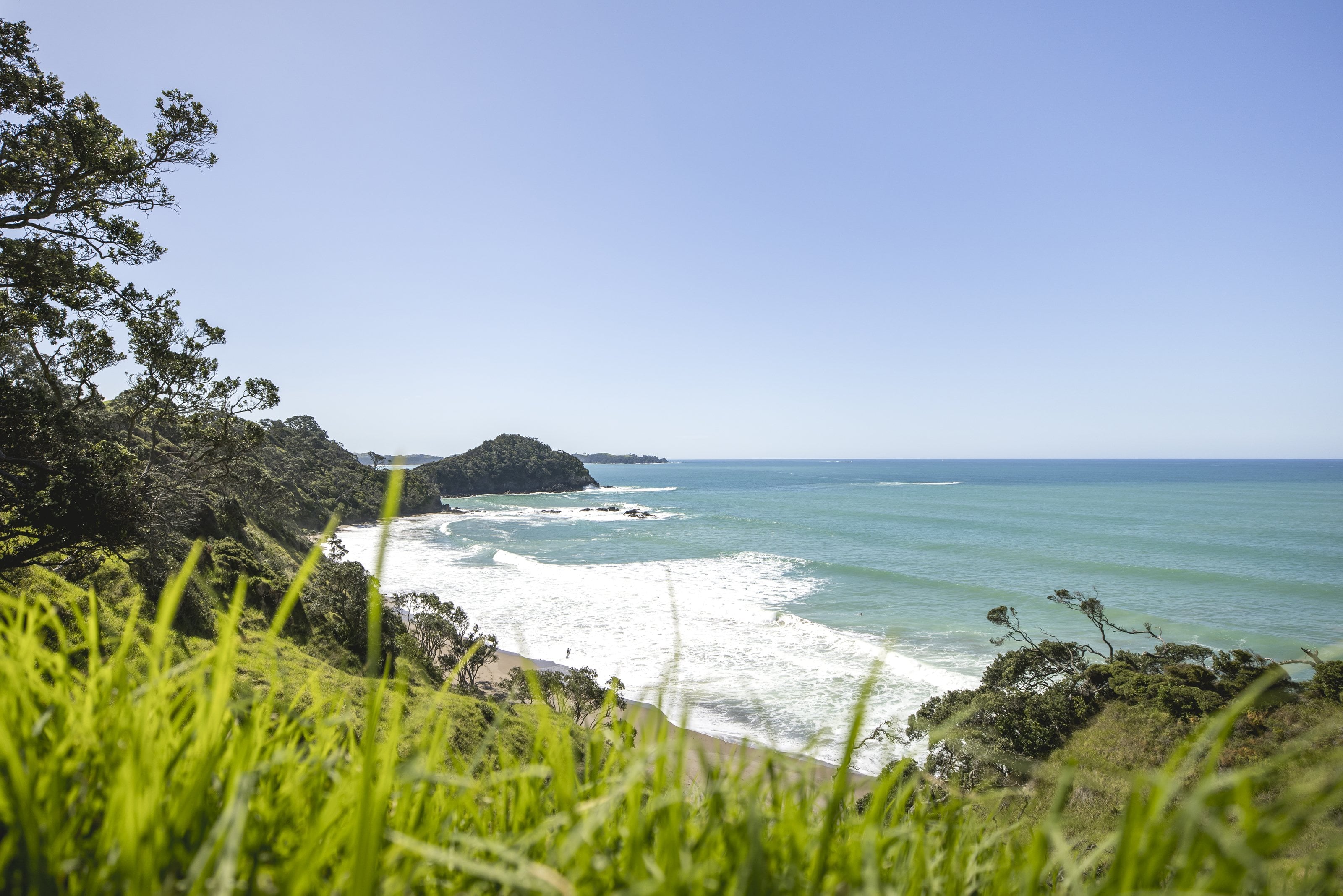
New Zealand's seasons are the reverse of the Northern Hemisphere's: summer runs from December to February, winter from June to August. With ocean on every side, the country is mild almost everywhere, with mean annual temperatures between 16°C (61°F) in the far north and 10°C (50°F) in the deep south. There are four genuine seasons here and no extremes to plan around. It is also unusually regional, which turns out to be the useful part: within a couple of hours you can change climate entirely and pick the one you came for.
Average temperatures by season
Typical overnight low to daytime high for each season, from NIWA's 1991–2020 station records. Inland Central Otago and Canterbury run hotter than the averages on a clear summer afternoon, and can pass 30°C (86°F).
North Island
- Bay of Islands / Whangārei: summer 16 to 24°C (60 to 75°F), autumn 13 to 21°C (56 to 70°F), winter 9 to 16°C (47 to 61°F), spring 11 to 19°C (52 to 66°F)
- Auckland: summer 16 to 23°C (61 to 74°F), autumn 13 to 20°C (55 to 69°F), winter 8 to 15°C (47 to 59°F), spring 11 to 18°C (52 to 64°F)
- Rotorua: summer 12 to 22°C (54 to 72°F), autumn 9 to 18°C (48 to 65°F), winter 4 to 12°C (39 to 54°F), spring 7 to 16°C (45 to 62°F)
- Hawke's Bay / Napier: summer 14 to 24°C (58 to 75°F), autumn 10 to 20°C (50 to 68°F), winter 5 to 15°C (41 to 59°F), spring 9 to 19°C (49 to 67°F)
- Wellington: summer 13 to 20°C (56 to 68°F), autumn 11 to 17°C (52 to 62°F), winter 7 to 12°C (45 to 54°F), spring 9 to 15°C (49 to 59°F)
South Island
- Nelson: summer 13 to 22°C (56 to 72°F), autumn 9 to 19°C (48 to 65°F), winter 3 to 13°C (38 to 56°F), spring 8 to 17°C (47 to 63°F)
- Kaikōura: summer 13 to 20°C (55 to 68°F), autumn 10 to 16°C (50 to 62°F), winter 6 to 12°C (43 to 53°F), spring 8 to 15°C (47 to 60°F)
- Christchurch: summer 11 to 22°C (52 to 71°F), autumn 7 to 17°C (44 to 63°F), winter 1 to 12°C (34 to 53°F), spring 6 to 17°C (42 to 62°F)
- Aoraki / Mount Cook: summer 8 to 20°C (47 to 68°F), autumn 4 to 15°C (39 to 59°F), winter −1 to 8°C (29 to 47°F), spring 3 to 14°C (38 to 57°F)
- Queenstown: summer 9 to 21°C (49 to 70°F), autumn 5 to 15°C (40 to 60°F), winter −1 to 9°C (31 to 48°F), spring 4 to 15°C (40 to 60°F)
- Central Otago / Alexandra: summer 10 to 23°C (49 to 74°F), autumn 4 to 17°C (39 to 62°F), winter −1 to 9°C (29 to 49°F), spring 4 to 17°C (39 to 63°F)
- Milford Sound: summer 10 to 19°C (51 to 67°F), autumn 7 to 16°C (45 to 60°F), winter 2 to 10°C (36 to 50°F), spring 6 to 15°C (42 to 59°F)
- Dunedin: summer 11 to 18°C (52 to 65°F), autumn 8 to 15°C (47 to 60°F), winter 4 to 11°C (39 to 52°F), spring 7 to 15°C (45 to 59°F)
- Invercargill: summer 9 to 18°C (48 to 65°F), autumn 6 to 15°C (43 to 59°F), winter 2 to 10°C (35 to 50°F), spring 5 to 14°C (42 to 58°F)
What each season gives you
Summer, December to February. The warmest months and the busiest. January and February usually run warmer than December, so the back half is often the better half. The alpine passes are open, the days are long, and the sea is warm enough to swim.
Autumn, March to May. The most settled weather of the year. The sea holds summer's warmth into April, the crowds thin, Central Otago turns gold and the vineyards come into harvest. From late April the high passes begin to see snow. For walking, photography and wine, this is the strongest season in the country and still the least appreciated.
Winter, June to August. July is the coldest month, though mild by continental standards. Auckland sits between 8 and 15°C (47 to 59°F) all winter. Queenstown falls to around freezing overnight and recovers to 9°C (48°F) by day, so the cold is a morning matter rather than an all-day one. Snow gathers in the mountains and rarely reaches the coastal North Island. Worth knowing that the south is at its driest in winter, so a July journey through Otago can be drier underfoot than the same route in January.
Spring, September to November. Snowmelt drives the rivers and waterfalls to their fullest, the higher ski fields run into October, and lambing fills the high country. Systems move through quickly, so spring rewards an itinerary with a little room in it.
Why the light here is so good
Photographers come to New Zealand for the light, and there is a physical reason for it. The air is exceptionally clean, with very little haze between the sun and the ground, so colours hold and distant ranges stay sharp. Most of the country records more than 2,000 hours of sunshine a year, and Blenheim, at the top of the South Island, records 2,521.
That same clarity has one practical consequence worth knowing before you arrive. Peak ultraviolet radiation in New Zealand is around 40% higher than at comparable latitudes in the Northern Hemisphere. NIWA attributes it to three things: the Earth sits closest to the sun during the southern summer, there is less ozone overhead, and that very clean air.
- Maximum summer UV Index: around 12, and above 13 in the far north
- Peak winter UV Index: 1 to 2
- Time to burn at UVI 12: about 12 minutes
- Time to burn at UVI 6: about 24 minutes
Twelve minutes is a real figure, and it holds on overcast days, on the water, and with more force at altitude. From September to April, treat sun protection between 10am and 4pm as routine: a hat, sunglasses, SPF 30 or higher, and shade in the middle of the day.
Rain, and where it falls
The Southern Alps run the length of the country and stand directly in the path of the prevailing westerly, which means the west is wet and the east is dry. The gap is extraordinary: Milford Sound records 6,545mm (258in) of rain a year, while Alexandra in Central Otago receives 365mm (14in). Nearly eighteen times, on opposite flanks of the same mountains.
That contrast is a gift rather than a complication. It gives the West Coast its temperate rainforest and Central Otago the dry, bright autumns its pinot noir depends on, within a morning's drive of each other. For planning, the rule covers most of it: the eastern side of both islands is the drier, brighter one, the western side the greener and wetter.
Fiordland is the exception worth reframing. It is wettest in summer, and rain there is not a spoiled day. The waterfalls that give Milford and Doubtful Sounds their character only run properly when it is falling, and a wet morning means several hundred of them at once, coming off cliffs a kilometre high.
Daylight
The further south you go, the longer the summer evenings. At the December solstice Queenstown sees close to 15 hours and 40 minutes of light, and Auckland around 14 and a half. In practice the light in Otago and Southland holds past half past nine, which changes what a day can contain. Dinner at a lodge and a walk afterwards stop being alternatives.
Choosing your season
The honest answer is that no season is better than another, and the question is worth asking region by region rather than for the country as a whole. A February journey through Fiordland and a February journey through Central Otago are two different climates in the same fortnight.
Autumn gives the most settled conditions and the fewest people. Summer gives the longest days and the fullest access. Winter gives the mountains and a South Island largely to yourself. Spring gives water at its most powerful.
For a month-by-month view, see our guide to when to visit New Zealand. For the two regions where the contrast is sharpest, Fiordland and Central Otago sit at opposite ends of the same weather system, and The Southern Heart travels between them.
Temperature and rainfall figures are NIWA climate station normals for 1991–2020, published under a Creative Commons Attribution 4.0 licence. Ultraviolet data is from NIWA, New Zealand's National Institute of Water and Atmospheric Research.
Written by
The people who compose the journeys. By PPG Tours, New Zealand owned for more than twenty years. How we write
Journeys this piece touches
The Southern HeartThe DiscoveryThe MasterpieceThe ExpeditionThe Hidden TrailThe Epicurean
More reading
Travel Intelligence
Health and safety in New Zealand: one of the safest countries you can travel in
Travel Intelligence, 4 min read
Driving in New Zealand: what makes it one of the world's great drives
Travel Intelligence, 4 min read