When to visit New Zealand: a month-by-month guide
New Zealand's seasons are reversed from North America's — which means the planning calendar works differently. Here's how we think about timing.
Travel Intelligence·8 min read·
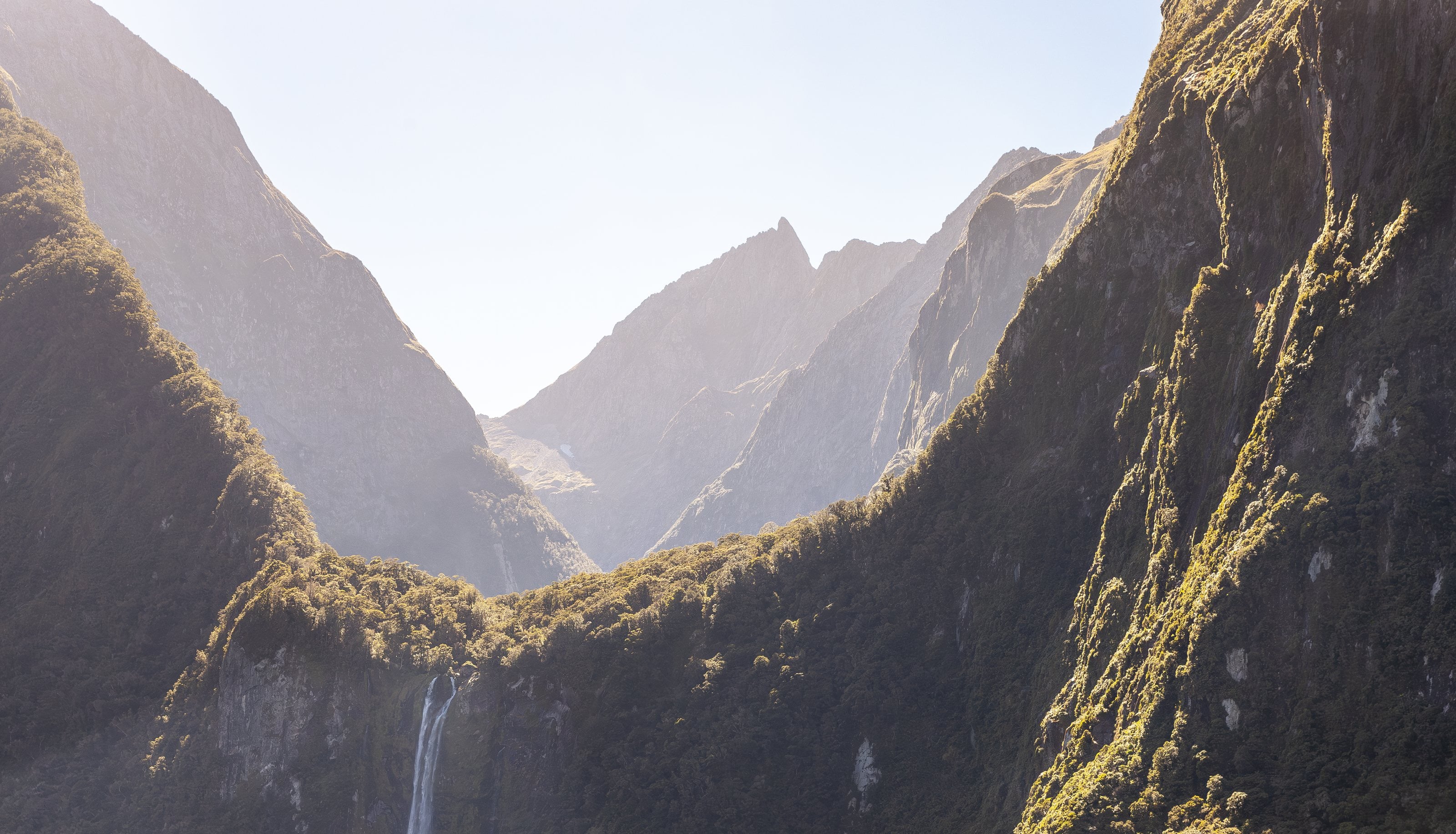
New Zealand's seasons run opposite to the Northern Hemisphere — when it's winter in New York, it's summer in Queenstown. This matters for planning, and it's one of the first things we talk through with guests who are thinking about dates.
The short answer: October through April is the primary season. The longer answer is that every month has something going for it, and the "best" time depends entirely on what you're coming for.
October — November: Spring
Spring arrives earlier in the North Island than the South. By October, the Northland coastline is warm, the vineyards are flowering, and the lambing season is well underway on the high-country stations. The Southern Alps still carry significant snow above 1,500 metres, which is extraordinary to fly over.
Why we like it: Fewer crowds than December–January. The landscapes are green from winter rain. Prices are slightly below summer peak. For Fiordland, spring is when the waterfalls are at their most dramatic — the melting snowpack feeds hundreds of falls simultaneously.
Worth knowing: October can be changeable, particularly in the South Island. The Milford Road can still close briefly due to avalanche risk in early October. We build in flexibility for weather on any itinerary that includes Fiordland in spring.
December — February: Summer
New Zealand's summer. Long days (Queenstown gets 16+ hours of daylight in December), warm temperatures, and the full tourist season in operation. Milford Sound is at capacity. The beaches of the Coromandel, Northland, and Nelson are genuinely beautiful.
Why we like it: This is when New Zealand is most reliably warm and accessible. It's also when the high-country helicopter routes are fully open — flights over the Aoraki/Mt Cook névé, landings on remote alpine lakes, access to station runs that are snowbound in winter.
Worth knowing: Peak season. Book accommodation well in advance, particularly at the sought-after lodges. Milford Sound is at its busiest — another reason we include an overnight stay, which bypasses the day-trip congestion.
March — April: Autumn
Autumn is our personal favourite. The tourist pressure eases after February. The deciduous trees in Central Otago — the poplars planted by early European settlers along the river valleys — turn gold and copper from late March. The harvest is underway in Marlborough, Hawke's Bay, and Central Otago: vineyards are at their most beautiful and most active simultaneously.
Why we like it: The light in autumn is extraordinary. The crowds are down. Winemakers are in their busiest and most rewarding period — this is the best time for a genuine cellar door or harvest experience. Temperatures are still warm enough for everything.
Worth knowing: April can bring the first autumn storms. Fiordland is always wetter than the east coast. We adjust itinerary routing based on seasonal forecasts.
May — July: Winter
New Zealand's winter is mild by Northern Hemisphere standards — snow in the cities is rare. But above the snowline, it's a different world. Queenstown, Wanaka, and Mt Hutt operate world-class ski fields from late June through September.
Why we like it: Queenstown in winter is a different city — quieter, more focused on skiing and the mountain environment, and with a warmth inside that the summer doesn't always produce. For non-skiers, the landscape is extraordinary — the snow-covered Remarkables reflecting in Lake Wakatipu is one of those images that doesn't fully prepare you for the reality.
Worth knowing: Fiordland in winter has a beauty that's hard to describe — mist on the water, the forest impossibly green, silence that goes all the way down. But the days are short and some activities have limited availability. We usually pair a winter Fiordland visit with the South Island wine regions rather than the outdoor activity programme.
August — September: Late Winter / Early Spring
The ski fields are at their best in August. By September, the first signs of spring appear in the North Island — kowhai trees flower in a shade of yellow that exists nowhere else in the natural world — while the South Island high country is still fully alpine.
Why we like it: Good skiing, and the first orchards flowering in Hawke's Bay and Nelson. Less crowded than the main season. For guests who've already done the obvious destinations and want something quieter, late winter has a particular character.
The question of which islands
The North and South Islands are different enough that the same dates can give you different experiences. October through April works for both. Winter ski itineraries are South Island focused. Summer beach itineraries lean North. Most of our two-week journeys include both — the internal flights are short (Auckland to Queenstown is 90 minutes) and the difference between the landscapes is one of the things that makes New Zealand worth the flight from the US.
If you're thinking about dates, start with what you're hoping to feel rather than where you want to go. We'll work backwards from there.
Written by
The people who compose the journeys. By PPG Tours, New Zealand owned for more than twenty years. How we write
Journeys this piece touches
Add Curated Experiences as a preferred source on Google (opens in a new tab)
More reading
Travel Intelligence
New Zealand weather by season: what it actually feels like, region by region
Travel Intelligence, 6 min read