What a genuine Māori cultural experience actually looks like
There's a version of Māori culture designed for tourist buses, and there's a version that stays with you for the rest of your life. Here's the difference.
Māori Culture·The CE Way·6 min read·
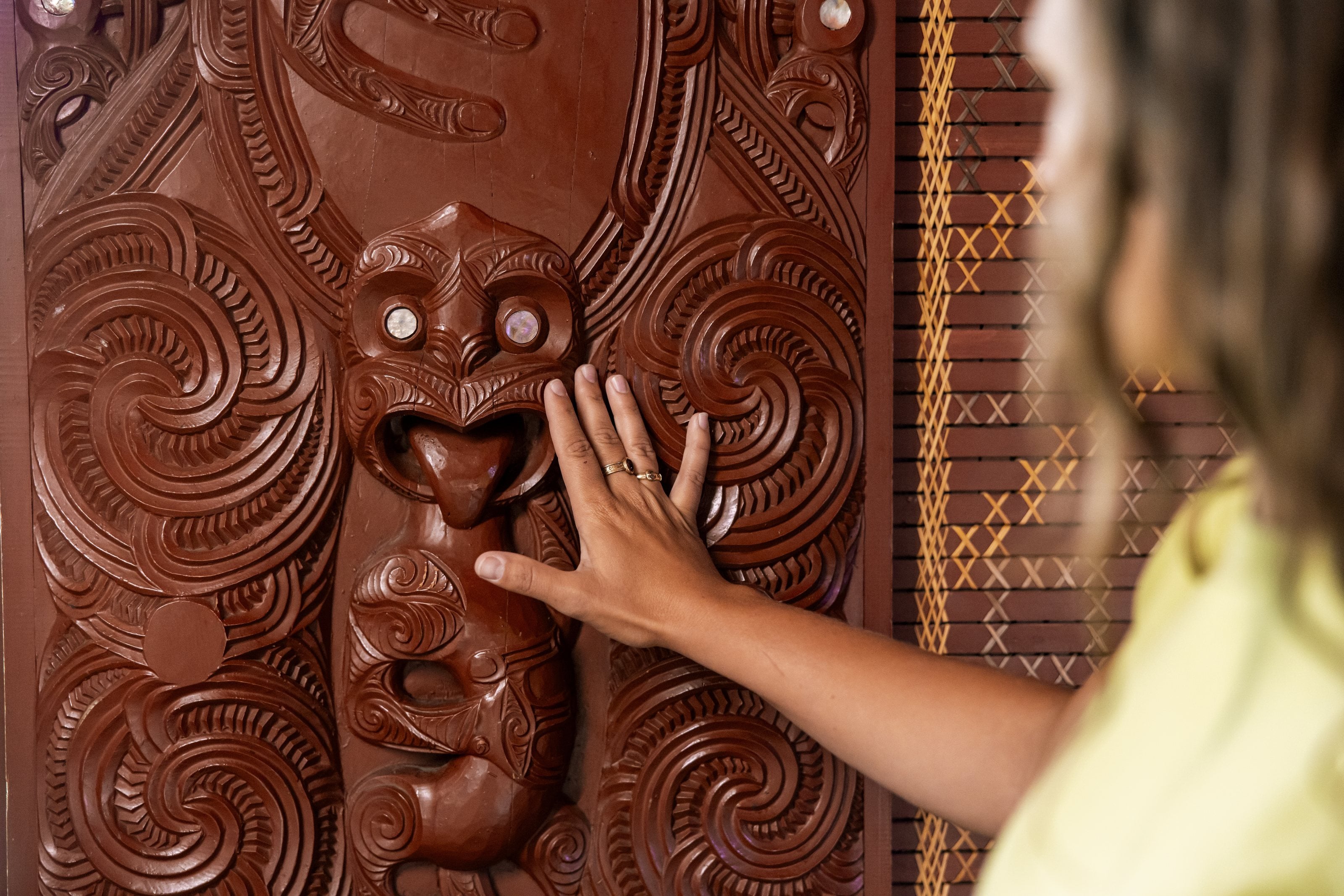
I want to be straightforward about something before we go further: the Māori cultural experience available at most tourist venues in New Zealand — a performance, a hāngi meal, a pre-packaged introduction to te reo and tikanga — is not what I'm describing here. That has its place. But it's not the thing worth crossing the Pacific for.
What I'm describing is something that takes longer to arrange, requires genuine relationships, and can't be booked through a website. It's a private pōwhiri on a marae — a formal welcome ceremony on the meeting ground that is the spiritual and social heart of an iwi. It means something for everyone in the room. It has protocols, obligations, and a weight that you feel even if you don't fully understand the words.
This is one of the experiences we've worked hardest to make possible for our guests. And it's the one they talk about most.
What a pōwhiri involves
A pōwhiri is a formal Māori welcome onto a marae — the complex of buildings and land that belongs to an iwi (tribe) or hapū (subtribe). It's not a performance. It's a living ceremony that has been conducted for centuries, adapted and maintained across generations.
The ceremony follows a structure: a challenge (the taki or wero), a call from the tangata whenua (the people of the land) to the manuhiri (guests) to approach, karanga (ritual calls) between women on both sides, whaikōrero (formal speeches) in te reo Māori, the hongi (the pressing of noses, sharing of breath), and then the sharing of kai (food).
For guests who've never experienced it: the hongi is not a photo opportunity. It's a moment of genuine connection — the sharing of breath as a symbol of shared humanity. It's brief and simple, and it's one of the most direct human interactions many of our guests have had with a stranger.
Why it requires relationships
We don't arrange these experiences through a commercial operator. We arrange them through relationships with specific iwi and cultural leaders that have been built over years through PPG Tours and our work in New Zealand.
That matters because a pōwhiri extended to a manuhiri carries obligations on both sides. The hosts are offering genuine manaakitanga — the Māori ethic of hospitality and care for others. In return, the guests are expected to approach with respect and genuine interest, not the posture of spectators.
We prepare guests before they arrive. We explain what will happen, what's expected, what the protocols mean. Not to script the experience, but to make sure guests can be present in it rather than confused by it.
Beyond the pōwhiri
A marae visit, done well, is usually a full day. After the formal welcome, there's often time with a master carver or weaver, instruction in basic te reo, a conversation about the particular history and landscape of that iwi, and a shared meal.
Some of the most memorable moments we've seen have been simple: a guest sitting with an elder, through an interpreter, learning the Māori name for a local bird and the story attached to it. Or a waiata (song) sung by the hosts at the end of the day, as the guests prepare to leave, that is only sung for departing manuhiri — a farewell that exists nowhere else in the world.
The wider cultural context
Māori culture is not a historical artefact. Te reo Māori is a living language undergoing genuine revitalisation — heard on national radio, taught in kura (schools), spoken on marae and in Parliament. Tikanga Māori (customs and protocols) shapes how New Zealanders understand their relationship to the land, to each other, and to the future.
For visitors from outside New Zealand, this is one of the most distinctive things about the country. Nowhere else in the Pacific has an indigenous culture this integrated, this visible, and this genuinely alive in public life.
We treat it accordingly.
A note on kaitiakitanga
One of the concepts that comes up repeatedly in a genuine Māori cultural experience is kaitiakitanga — guardianship, stewardship of the land. The idea that the land is not owned but held in trust, cared for on behalf of future generations.
This is one of the values that sits at the heart of Curated Experiences as a company. We'll talk more about it in future — but it's worth naming here, because you'll encounter it in any deep engagement with Māori culture, and it's worth arriving with some understanding of what it means.
Written by
The people who compose the journeys. By PPG Tours, New Zealand owned for more than twenty years. How we write
Journeys this piece touches
Add Curated Experiences as a preferred source on Google (opens in a new tab)
More reading
Māori Culture