New Zealand wildlife: where to find the rarest species on Earth
Eighty million years of isolation produced creatures found nowhere else. From kiwi to whale, here is where to encounter New Zealand's most extraordinary wildlife — and why it matters.
Conservation·Wild Interior·7 min read·
There is a sound you hear in the New Zealand bush at dawn, in the places where decades of conservation work have brought the birds back. It is not one bird — it is a density of birdsong so layered and complex that it sounds like a different country. Your ear adjusts. You start picking out individual calls. A tūī's liquid notes, a bellbird's chime, the distant rustle of a kākā working a tree trunk.
This sound is not the default. It is the result of an extraordinary national effort — predator-free sanctuaries, island refuges, fencing programmes, and generations of people who decided that silence was not acceptable.
New Zealand's wildlife is unlike anywhere else because it evolved in isolation for eighty million years. No native land mammals except bats. No snakes. Instead, birds filled every ecological niche — from the kiwi, which behaves like a badger, to the kākāpō, a flightless parrot that smells of honey and flowers. When humans arrived — first Māori, then Europeans — the introduced predators wiped most of them out. What remains is a scattering of survivors and a conservation story that is, for the right traveller, as moving as any landscape.
Kaikōura: whale watching as it should be
Kaikōura, on the South Island's east coast, is one of the few places in the world where sperm whales can be seen year-round. A deep submarine canyon runs close to shore, bringing nutrient-rich water to the surface. The whales stay to feed. They are here all year.
The standard approach is a boat trip — comfortable, well-run, with a high likelihood of sightings. But for guests who want something more, we arrange helicopter-and-boat combinations: a flight over the Seaward Kaikōura Range, a landing on a remote stretch of coast, and then a private boat out to the whales with a marine biologist who has spent years with this particular population.
You see the whale's fluke rise as it dives. You wait — sometimes minutes, sometimes longer — and then it surfaces again, exhaling a column of spray that catches the light. There is something about the size of a sperm whale, the sheer physical reality of it, that recalibrates your sense of what the natural world contains.
Dusky dolphins often accompany the boats here, sometimes in pods of hundreds. Fur seals haul out on the rocks along the coast. Albatross wheel overhead — Kaikōura is one of the best places in the Southern Hemisphere to see pelagic seabirds close to shore.
Otago Peninsula: the world's rarest penguin and the only mainland albatross colony
The Otago Peninsula, near Dunedin, holds two distinctions that matter to anyone serious about wildlife.
First, Taiaroa Head is the only mainland breeding colony of royal albatross in the world. These birds have wingspans of up to three metres. They spend years at sea, returning to this single headland to breed. The guided tour takes you into a glassed observation room above the colony. You watch them land — an ungainly, beautiful process that looks like a small aircraft coming in too fast — and then settle onto their nests with the quiet dignity of creatures that have been doing this for millennia.
Second, the yellow-eyed penguin, or hoiho, is one of the rarest penguins on Earth. Fewer than 4,000 remain. They breed in the coastal forest and scrub of the Otago Peninsula and the Catlins, retreating to their nests at dusk. Seeing them requires patience and a guide who knows where to stand and when to stop talking. The reward is quiet — a penguin emerging from the surf, standing still for a moment as if orienting itself, and then making its way into the bush with a gait that is entirely its own.
Further up the coast, at Oamaru, the little blue penguin — the world's smallest — returns to shore each evening in groups called rafts. The colony here is stable, the viewing platforms well-designed, and the experience is oddly tender: dozens of tiny penguins hurrying across the sand toward their burrows.
Zealandia: the sanctuary that changed the game
In Wellington, a suburb away from the city centre, there is a valley enclosed by a predator-proof fence that runs for 8.6 kilometres. Inside, the birdsong is overwhelming. Kākā — large, intelligent forest parrots — will land on the railing beside you and inspect your face. Tuatara, a reptile that has existed virtually unchanged for 200 million years, bask on the paths. Saddlebacks, stitchbirds, and hihi — species that were extinct on the mainland for over a century — are breeding again.
Zealandia is the world's first fully fenced urban ecosanctuary. It proved something important: that with enough fence, enough trapping, and enough patience, you could bring the birds back even in a city. The experiment worked so well that kākā are now breeding in Wellington's suburbs — a conservation outcome that no one predicted.
We arrange private after-hours visits with Zealandia's conservation team for guests who want to understand the project in depth. The night walks here are something else: kiwi foraging in the undergrowth, glowworms in the banks, the sound of morepork owls calling across the valley.
The kiwi: finding New Zealand's national bird
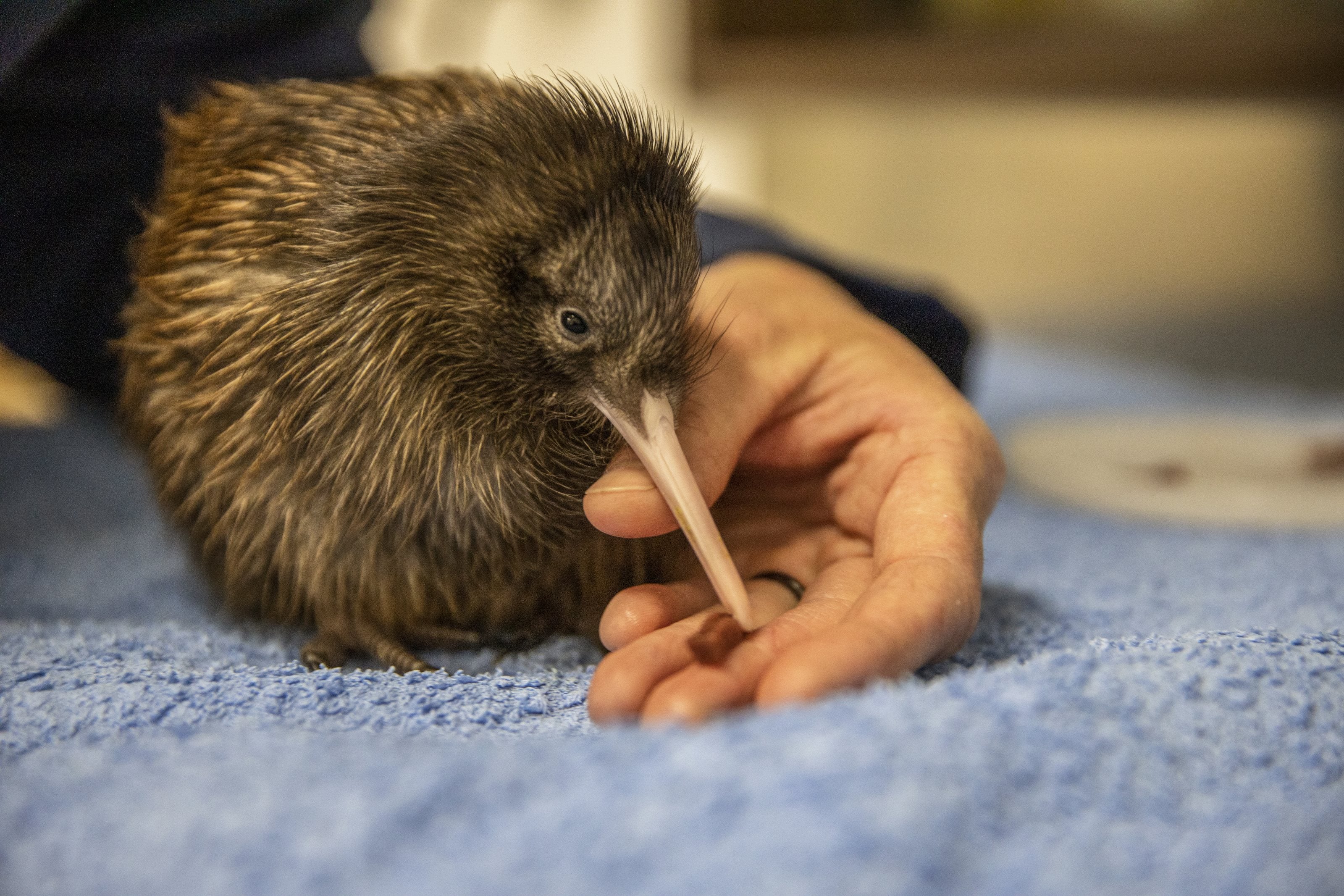
The kiwi is nocturnal, critically endangered, and notoriously difficult to see in the wild. Most New Zealanders have never seen one. For visitors, the question is not just where to look, but whether the experience will be real or a performance.
The best wild kiwi encounters are on Stewart Island, at the southern tip of the country, where the population is healthy enough that night walks regularly produce sightings. Trounson Kauri Park in Northland is another reliable option, with guided night walks through ancient kauri forest. For a more accessible encounter, Zealandia and Rainbow Springs in Rotorua both have kiwi houses where you can observe the birds in near-natural conditions — these are conservation facilities first, visitor experiences second.
We can arrange private kiwi experiences in several parts of the country. The best ones happen at night, in silence, with a guide who has dedicated their career to these birds. You hear the kiwi before you see it — a rustling in the undergrowth, a probing beak, and then a shape moving through the darkness with a gait that belongs to no other creature.
The conservation that makes it possible
Every wildlife encounter in New Zealand exists because someone chose to protect something. The predator-free islands — Tiritiri Matangi near Auckland, Kapiti Island near Wellington, Ulva Island near Stewart Island — are maintained by trapping programmes and volunteer labour. The takahē, a flightless bird that was thought extinct for fifty years before a small population was discovered in a remote Fiordland valley in 1948, now numbers around 500 birds, each one tracked and managed. The Te Anau Bird Sanctuary, where you can see takahē up close, tells this story better than any museum.
For guests who want to go deeper, we connect you with the people doing this work — the rangers, the volunteers, the landowners who have turned sheep stations into conservation projects. These are not tourist experiences in the conventional sense. They are conversations, walks, mornings spent learning what it takes to bring a species back from the edge. They are among the most memorable things we help people find.
How we build wildlife into a journey
Wildlife encounters in New Zealand are not theme park experiences. They require timing, local knowledge, and a willingness to adapt to conditions that are not within anyone's control. The albatross may not be flying. The penguins may be at sea. The kiwi may not show.
We build journeys that give wildlife the space to happen rather than forcing it. Two nights in Kaikōura rather than one, so you have two chances at the whales. A day on the Otago Peninsula that leaves the evening free for penguins. A morning at a sanctuary before the crowds arrive, because that is when the birds are most active.
If encountering New Zealand's wildlife — in the wild, on its terms — is part of why you are coming, tell us that early. It changes where we send you, when, and with whom.
Written by
The people who compose the journeys. By PPG Tours, New Zealand owned for more than twenty years. How we write
Journeys this piece touches
Places in this piece
Add Curated Experiences as a preferred source on Google (opens in a new tab)
More reading
Conservation