Central Otago pinot noir: a guide for serious wine travellers
The world's southernmost wine region produces pinot noir unlike anything from Burgundy, Sonoma, or the Willamette Valley. Here's how to experience it properly.
Food & Wine·6 min read·
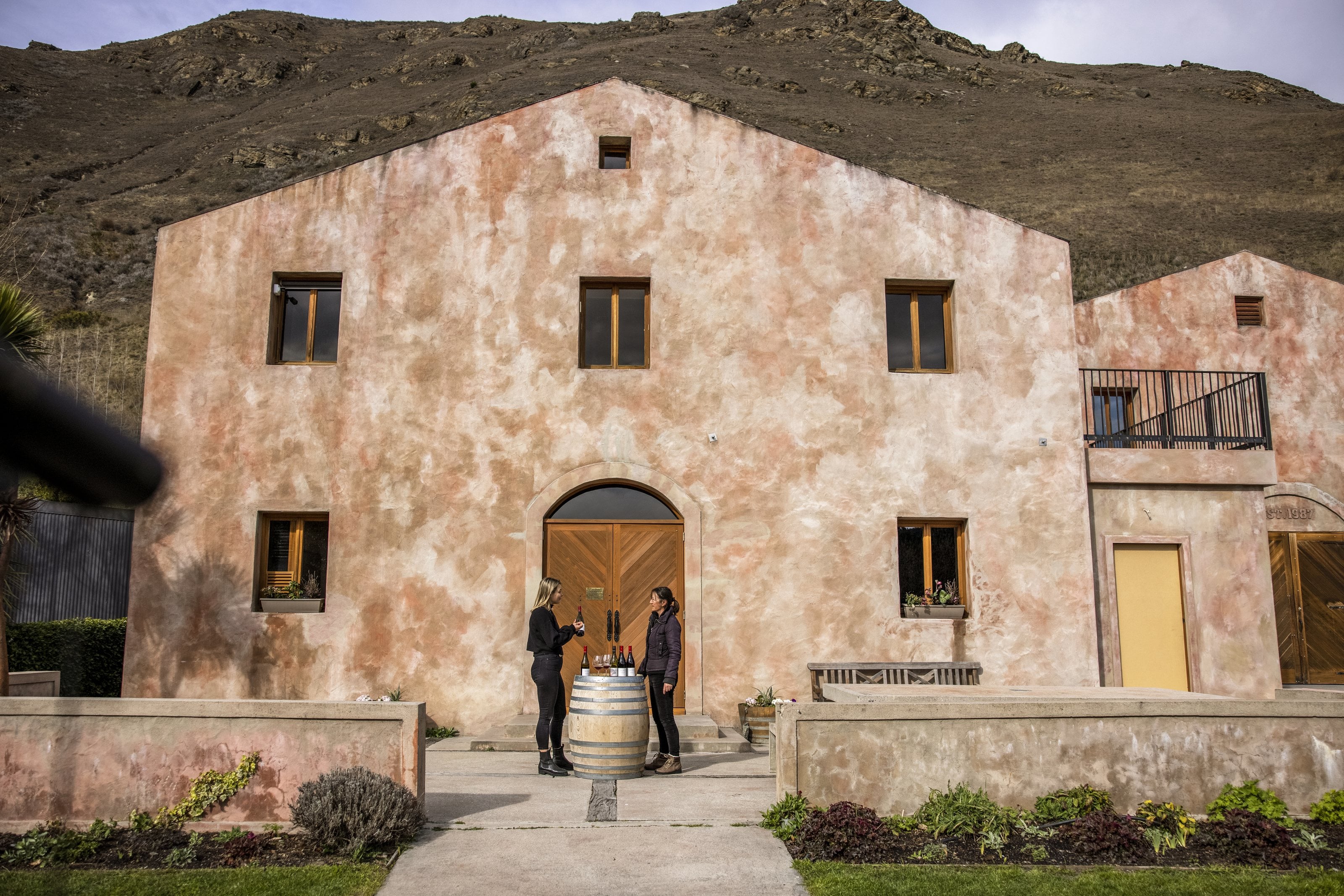
There's a moment that tends to happen at Felton Road, or Ata Rangi, or Mt Difficulty, when a guest from California or Oregon takes a glass of Central Otago pinot noir and tilts it in the light. And then they smell it. And then they taste it. And then they look at me and say some version of: "this is not what I was expecting."
It never is.
Central Otago pinot noir is genuinely its own thing. It's not trying to be Burgundy. It's not the Willamette Valley's warmer cousin. It's something that emerged from a specific continental climate — high altitude, extreme temperature differentials between day and night, schist soils — and it tastes like nowhere else.
The region
Central Otago sits inland, ringed by mountain ranges, at an altitude that makes it New Zealand's only continental wine climate. The Queenstown Basin, Gibbston Valley, Bannockburn, Cromwell, and Alexandra are the principal sub-regions, each producing wines with distinct character.
The latitude is 45 degrees south — the equivalent of Burgundy in the Northern Hemisphere, inverted. But the climate comparison ends there. Where Burgundy is cool-maritime, Central Otago is continental and often extreme. Frosts in November can wipe out flowering buds. Summer temperatures can reach 35 degrees. The diurnal range — the difference between daytime high and nighttime low — can exceed 20 degrees. This stresses the vines, slows ripening, and builds the kind of flavour complexity that the world's most sought-after pinot noirs are defined by.
The producers worth knowing
Felton Road — Bannockburn. The winery that established the international reputation of Central Otago pinot noir. Organic and biodynamic since 2010. The Calvert and Cornish Point single-vineyard expressions are the benchmarks against which others are measured. Private tastings in the cellar with the winemaking team are possible with appropriate advance notice.
Ata Rangi — Martinborough (Wairarapa). Technically outside Central Otago, but worth including in any serious NZ pinot itinerary. Established 1980. The Célèbre blend and the estate pinot noir have been among New Zealand's finest wines for four decades. Founder Clive Paton and his family still own and run the property.
Mt Difficulty — Bannockburn. One of the most consistently excellent producers in the region across a wide range of price points. The long-lunch experience at the restaurant overlooking the Cromwell Basin, with winemaker pairings, is a full afternoon well spent.
Maude — Wanaka. A smaller producer, husband-and-wife owned, making wines of genuine precision. The Wanaka pinot noir has a freshness and tension that distinguishes it from the richer Bannockburn style.
Burn Cottage — Cromwell. Biodynamic. Founded by a group of investors that includes Rupert Murdoch, which is less important than the fact that the wines are excellent and the winemaker, Jennifer Parke, is among the most thoughtful in the country.
How we arrange the cellar door experience
The difference between a cellar door visit and a cellar door experience is the person you're with.
A standard drop-in tasting at most Central Otago wineries involves the tasting room, a set flight, and a retail conversation. That's fine. A visit arranged through us typically involves the winemaker or a senior team member, access to library vintages that aren't poured in standard tastings, and the time to have the kind of conversation about viticulture and philosophy that doesn't happen on a walk-in.
Some of the producers we work with offer private lunch in the vineyard — not a restaurant, but a table set among the vines, with wines pulled from the cellar specifically for the day. This requires planning but it's the right way to do it.
Connecting the wine to the landscape
Central Otago's wine country and its wilderness are inseparable. The Cromwell Basin looks like a Western — wide valley, schist outcrops, poplars turning gold in autumn. The Gibbston Valley is a narrow gorge through the mountains. The Carrick estate sits on a bench looking down into Lake Dunstan.
We usually design Central Otago as a two-to-three day component within a South Island journey — based in Queenstown or Wanaka, with days moving through the sub-regions. It pairs naturally with Fiordland to the south and the Mackenzie Basin to the north.
If wine is the primary motivation rather than a component of a broader journey, tell us that. It changes the architecture of what we design.
Written by
The people who compose the journeys. By PPG Tours, New Zealand owned for more than twenty years. How we write
Journeys this piece touches
Places in this piece
Add Curated Experiences as a preferred source on Google (opens in a new tab)
More reading
Food & Wine